
Integration dashboard, steering wheel and CAN interface
Transmit, understand and exploit vehicle data
In a modern competition vehicle, electronic equipment no longer operates in isolation. Engine calculator, dashboard, steering wheel, sensors, actuators or power modules must constantly exchange information to allow the pilot and teams to operate the vehicle correctly.
The CAN – Controller Area Network is today one of the main communication networks used to organize these exchanges.
Reliable, robust and widely deployed in motorsport, it allows several electronic equipment to communicate on the same network without multiplying dedicated electrical links.
But connecting two devices to a CAN network does not necessarily mean that they will understand each other.
01 — Understand and interpret
Getting devices to communicate when they don’t always speak the same language
The CAN defines how messages are circulating on the network. On the other hand, each manufacturer remains free to define how their information is organized in these messages.
Engine speed, water temperature, oil pressure, gear engaged, accelerator position or status of a function can thus be transmitted with different identifiers, formats and scales depending on the computer used.
A display designed to communicate natively with a given ECU will therefore not necessarily be able to interpret information from a calculator from another brand.
This problem often appears when renovating or modernizing a competition vehicle: the ECU still works perfectly, but the old dashboard becomes obsolete, difficult to repair or no longer meets the needs of the user.
It is also found in new projects when several equipment from different manufacturers must be integrated into the same electronic architecture.
CoreView: Simplify CAN Integration
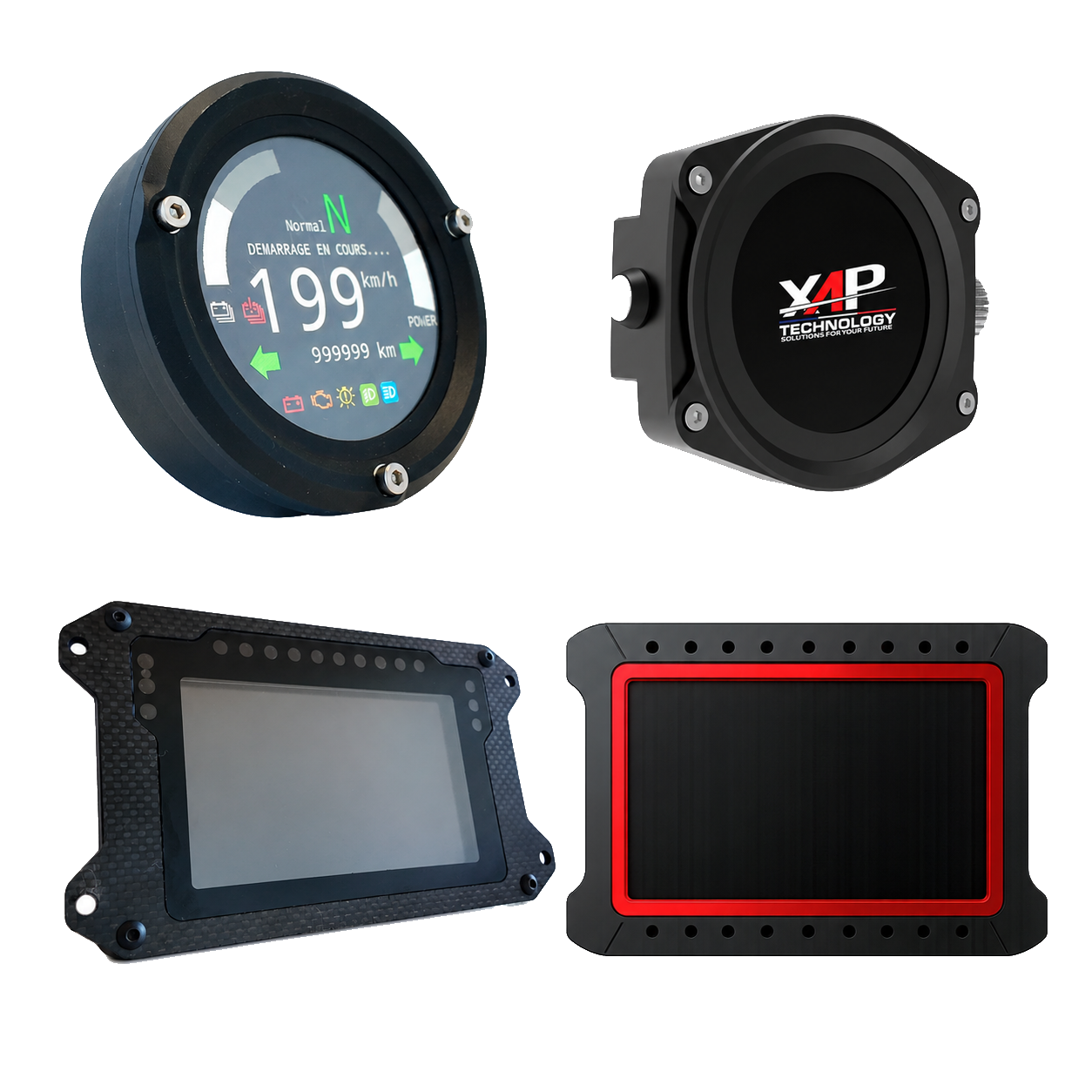
To meet this need, XAP offers the Coreview range.
Coreview products are preconfigured to communicate with the CAN protocol of the calculator specified when ordering. The main engine data is already identified and integrated to allow simple and quick commissioning.
The principle is to minimize the work necessary to replace or add a display on an existing vehicle.
The software Dash Editor 4, supplied in basic version, then allows you to adapt the essential settings of the product and to personalize its use.
Coreview is thus a solution adapted to both an enthusiast wishing to modernize his vehicle and a trainer looking for quick and controlled integration.
02 — Configure and control
Turn the display into a real interface with the vehicle
For some users, viewing the main engine information is not enough.
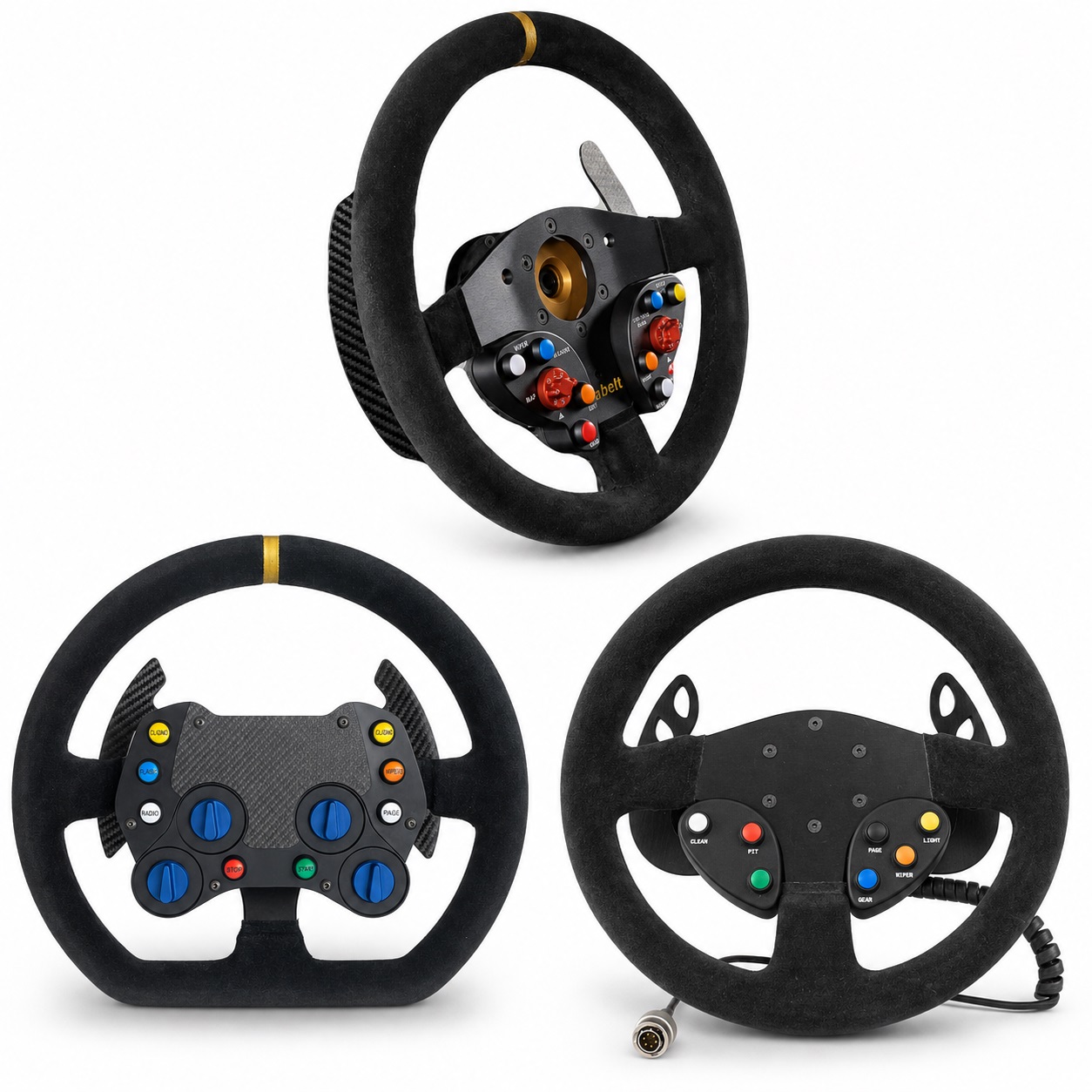
A competition car sometimes requires more fine control of its parameters, creating specific alarms or allowing the pilot to act directly on different functions from his steering wheel or control interface.
The display and the steering wheel then become real Human-machine interfaces, able to organize access to essential information and vehicle controls.
The pilot can thus visualize the information useful for his conduct as a priority, while specific pages can be dedicated to diagnosis, focus or strategy.
Depending on the vehicle’s architecture, controls can also act on different functions such as:
- engine settings;
- the traction control;
- available maps;
- operating strategies;
- or certain auxiliary equipment orders.
The interest is also to be able to control the Calculator feedback.
A command sent from a steering wheel or keypad can thus be associated with a status confirmation from the ECU or the equipment concerned.
The system is then no longer content to send an order: it also allows the pilot to know if it has really been taken into account.
Build a HMI adapted to the vehicle and the pilot
Display pages, alarm thresholds, LEDs, priority messages, commands and status feedback can be arranged according to the application needs.
The objective is therefore no longer just to have an additional screen, but to build an interface consistent with the way the vehicle is operated.
03 — Process and decide
Make HMI a smart node of CAN architecture
On the most complex vehicles, the amount of data exchanged increases considerably.
A prototype, single-seater or vehicle with many computers can use multiple CAN networks and several hundred different information.
In this context, the challenge is no longer just to receive and display the data. You have to be able to process, combine and prioritize them.
XAP solutions can be configured to exploit math channels, set advanced alarms, or create strategies based on multiple information from the vehicle.
For example, displayed information can result from the calculation of several CAN data rather than from direct reading of a single sensor.
Conditions can also be combined to trigger an alarm, modify a display or inform the pilot when a particular situation appears.
multiple networks, one interface
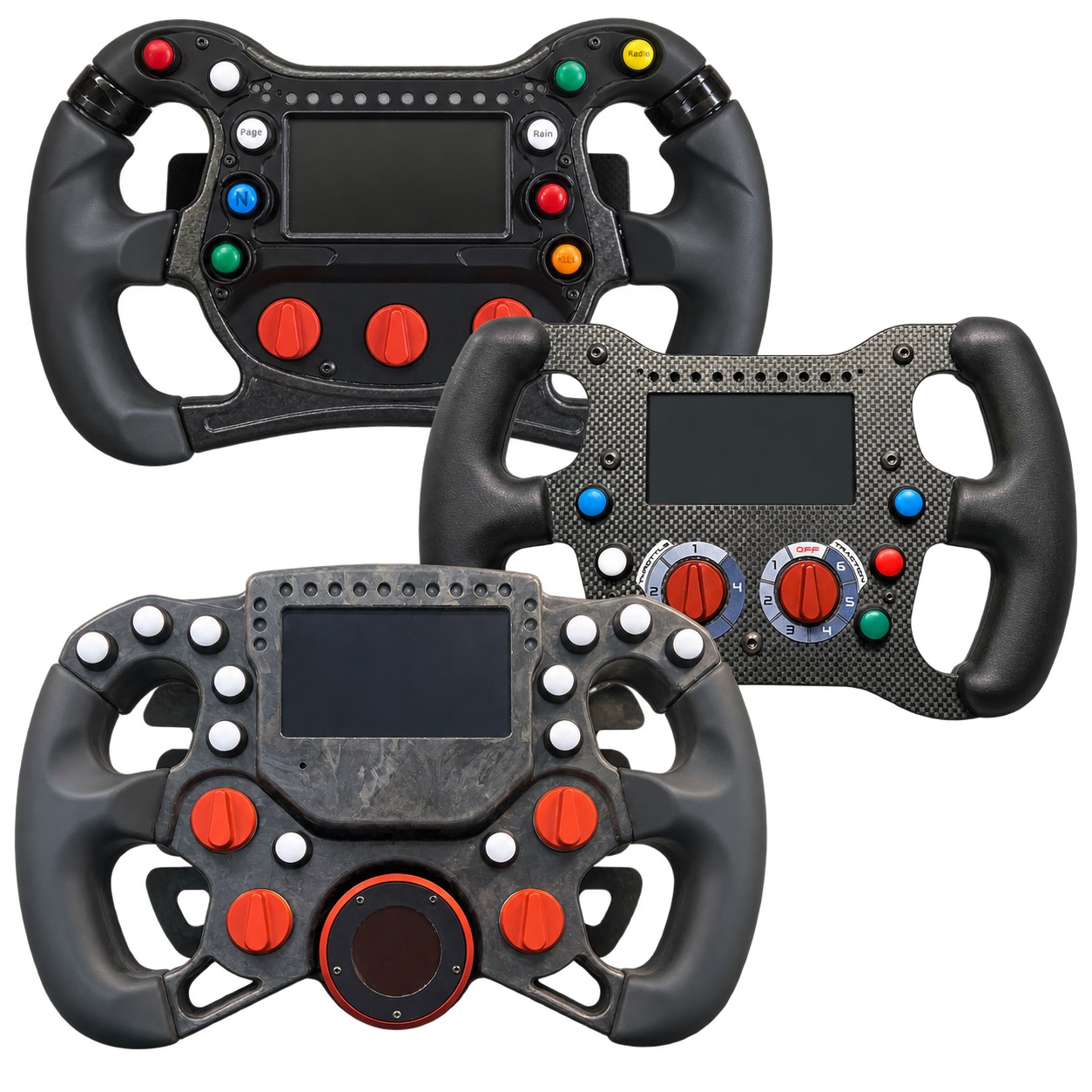
In the most advanced architectures, the human-machine interface becomes a real point of convergence between the different embedded systems.
It can receive data from multiple computers or networks, organize it and present to the pilot only relevant information when it is needed.
This approach makes it possible to build much more advanced interfaces for prototypes, manufacturer vehicles or specific projects requiring a strong interaction between electronics, embedded software and pilot.
The dashboard or steering wheel is no longer used only to display information. It fully participates in the operation of the vehicle.
Thinking about vehicle-wide communication
A CAN network is only part of the electronic architecture.
The computers must be able to communicate with the electrical distribution systems, actuators, pilot interfaces and the various on-board equipment.
The quality of an architecture therefore depends as much on the choice of components as on the way in which they are integrated and circulate their information.
Consult the Data Acquisition Solutions and the Motorsport Loom Solutions to link interface, measurements and integration.
Do you have an electronic integration project?
Replacement of an old dashboard, compatibility with a specific ECU, integration of a steering wheel, development of an HMI or architecture comprising several CAN networks: the XAP design office can support you in defining and integrating your embedded communication system.