
Protected electrical distribution architecture
Distribute, protect and control vehicle-wide energy
In a competition vehicle, the electrical architecture is not only used to power the equipment. It must also protect them, limit the risk of breakdown and remain simple to diagnose and evolve.
From the historic vehicle under renovation to the hybrid prototype, the challenge remains the same: Distribute power to the right place, protect each circuit and control the overall electrical operation of the vehicle.
01 — Protect and distribute
From fuse box to smart electrical distribution
Traditionally, the electrical distribution of a vehicle is based on a battery, fuses, relays and a harness connecting the different consumers.
The principle is simple and effective. But with the multiplication of computers, pumps, fans, sensors, actuators and auxiliary equipment, the architecture quickly becomes more complex: more relays, more protections and more wiring.
This complexity occurs both during the construction of a new vehicle and during the renovation or modernization of an existing car.
The electrical protection cannot also be dissociated from the sizing of the beam. The section of a conductor depends on the current consumed, but also on its length, the current calls at start, the permissible voltage drop and the operating conditions.
An architecture that is too largely dimensioned unnecessarily increases the weight and size of the beam. Conversely, an insufficiently sized circuit can cause overheating, voltage drops or deterioration of the equipment.
The objective is therefore to build a compact, reliable, and protected architecture able to evolve with the vehicle.
02 — Centralize and pilot
Replace fuses and relays with a programmable Powerbox
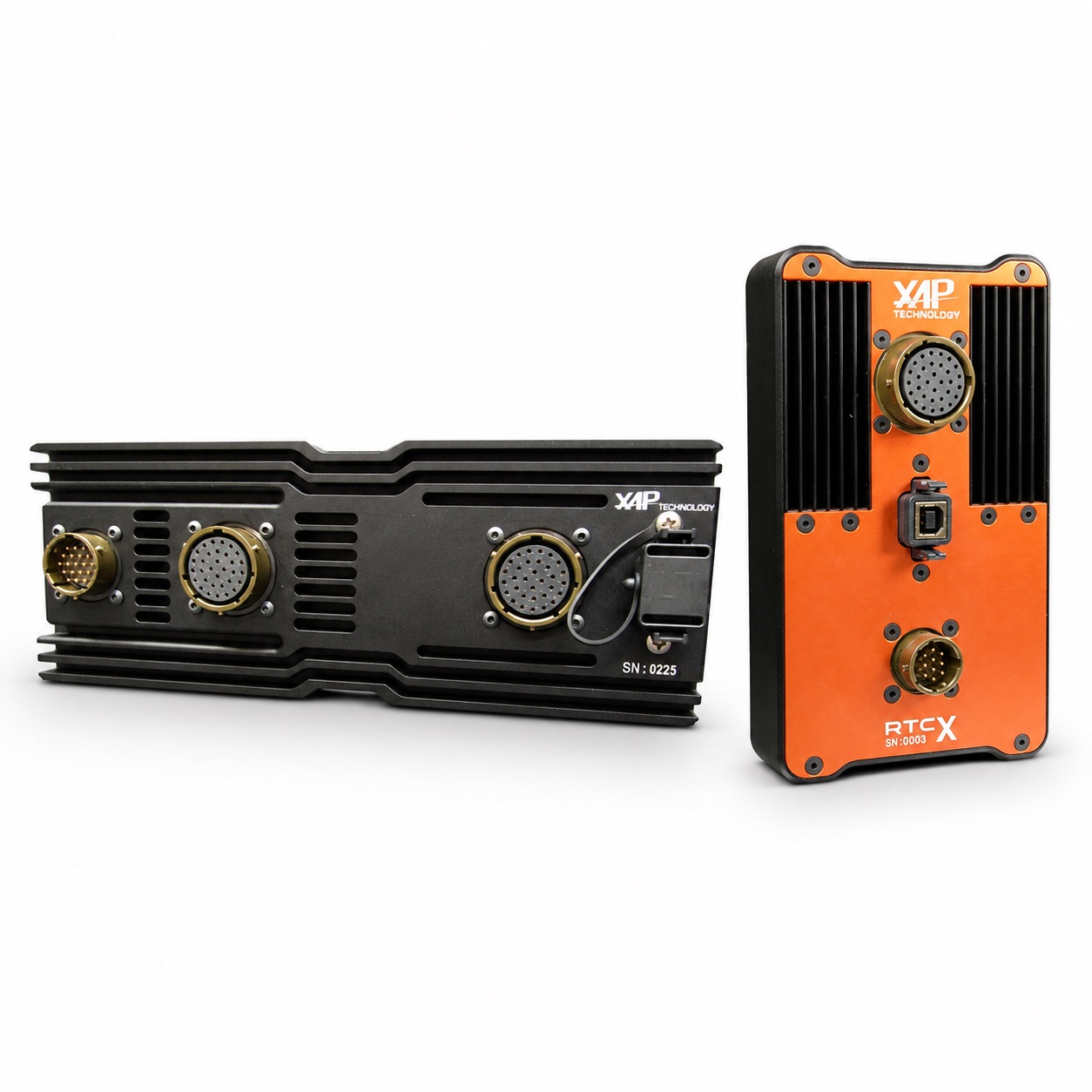
Electronic PowerBoxes make it possible to replace a large part of the traditional fuses and relays with electronically controlled power transistors. This is the principle of XAP’s RTCM and RTCX powerboxes.
Each output has its own protection. The current consumed is monitored and thresholds as well as timers can be configured to adapt the behavior of the Powerbox to the powered equipment. In the event of persistent overcurrent, the output can be cut off to protect the consumer and the loom.
Depending on the outputs, RTCMs and RTCXs can manage currents up to 50 A, with different configurable protection levels.
But the interest of a Powerbox is not limited to the protection. Outputs can be programmed to operate permanently, on command, with time delay or according to a defined logic. The equipment can also be activated gradually when the vehicle is powered on.
Instead of simultaneously starting computers, pumps, fans and other consumers, their activation can be sequenced in order to limit the peak current at start-up. CAN communication also allows the PowerBox to be integrated with the rest of the on-board electronics and to reassemble the state or consumption of the different outputs.
The electrical distribution thus becomes programmable, diagnosable and easier to evolve, while helping to simplify the loom architecture.
03 — Changing architecture
from 12 V to a multi-voltage electrical architecture
Electrification and hybridization introduce a new problem: several tensions must now be able to coexist in the same vehicle. Traditional equipment can continue to operate at 12V while new actuators, auxiliary systems or power functions require higher voltages. Building a completely independent system for each voltage then multiplies the protections, computers, settings and interfaces between the different networks.
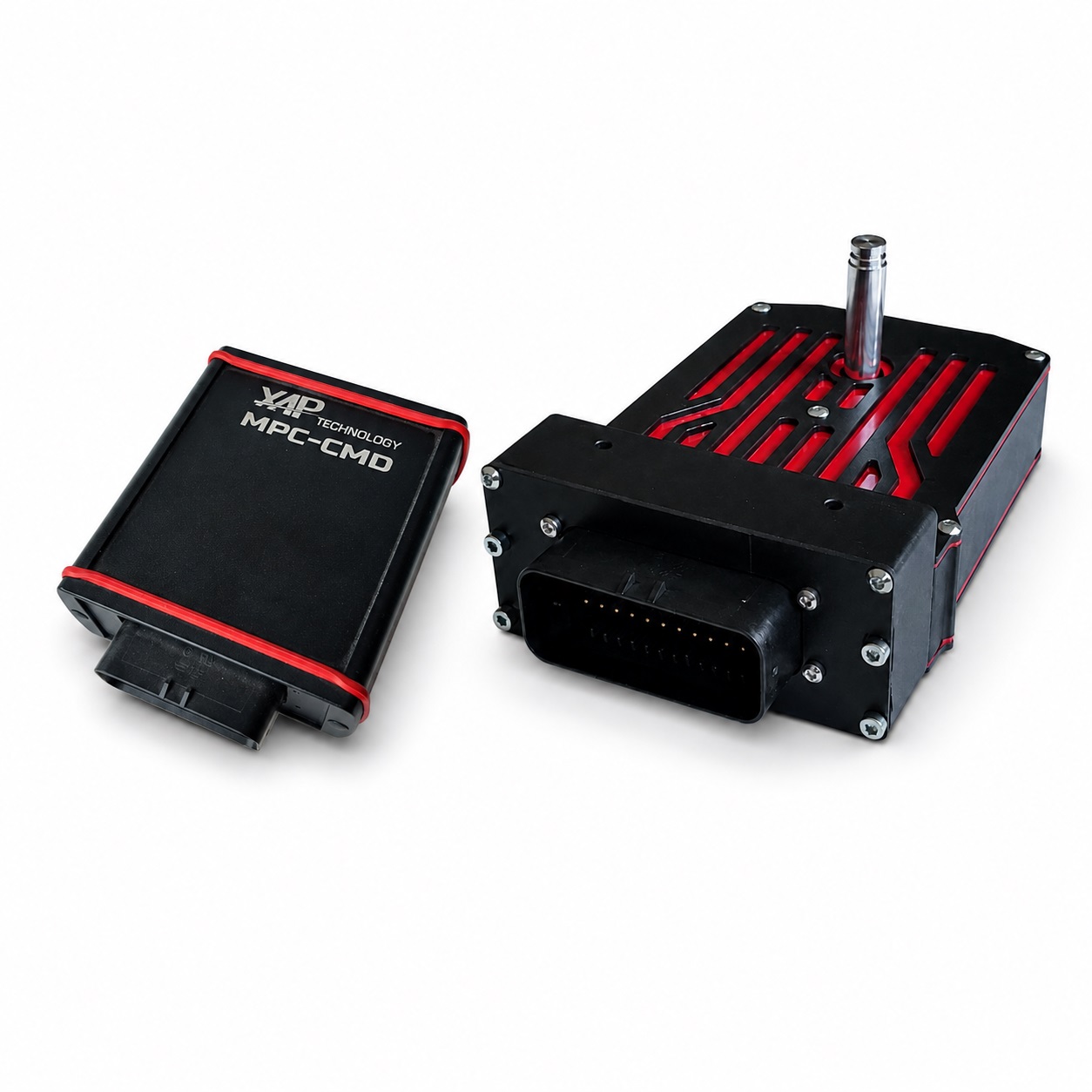
XAP’s new MPC – Modular Power Control range takes a different approach.
A central control module controls several power modules through a dedicated communication network. Each power module can be used on the voltage range corresponding to its consumers, while remaining integrated into a common control logic.
The MPC architecture is designed to manage multiple power grids and accepts, voltages up to 75V. It thus makes it possible to combine, for example, a 12 V network with a higher voltage domain within the same command architecture.
This modular design also allows the vehicle to progress gradually. A first module can cover the initial needs, then new power modules can be added when the architecture becomes more complex.
The MPC modules also include overcurrent protection and undervoltage and overvoltage monitoring functions. The system has a Safe Start for controlling current calls when powering up.
We thus move from several independent electrical systems to a more coherent architecture: Several voltages, several power modules, only one control logic.
Thinking about the system as a whole
A high-performance electrical architecture is built with the equipment it powers. Electrical distribution, protections, cable sections, connectors, harnesses and control strategies must be thought of together to ensure reliability, ease of maintenance and ability to evolve.
Go further

Motorsport Beam Solutions
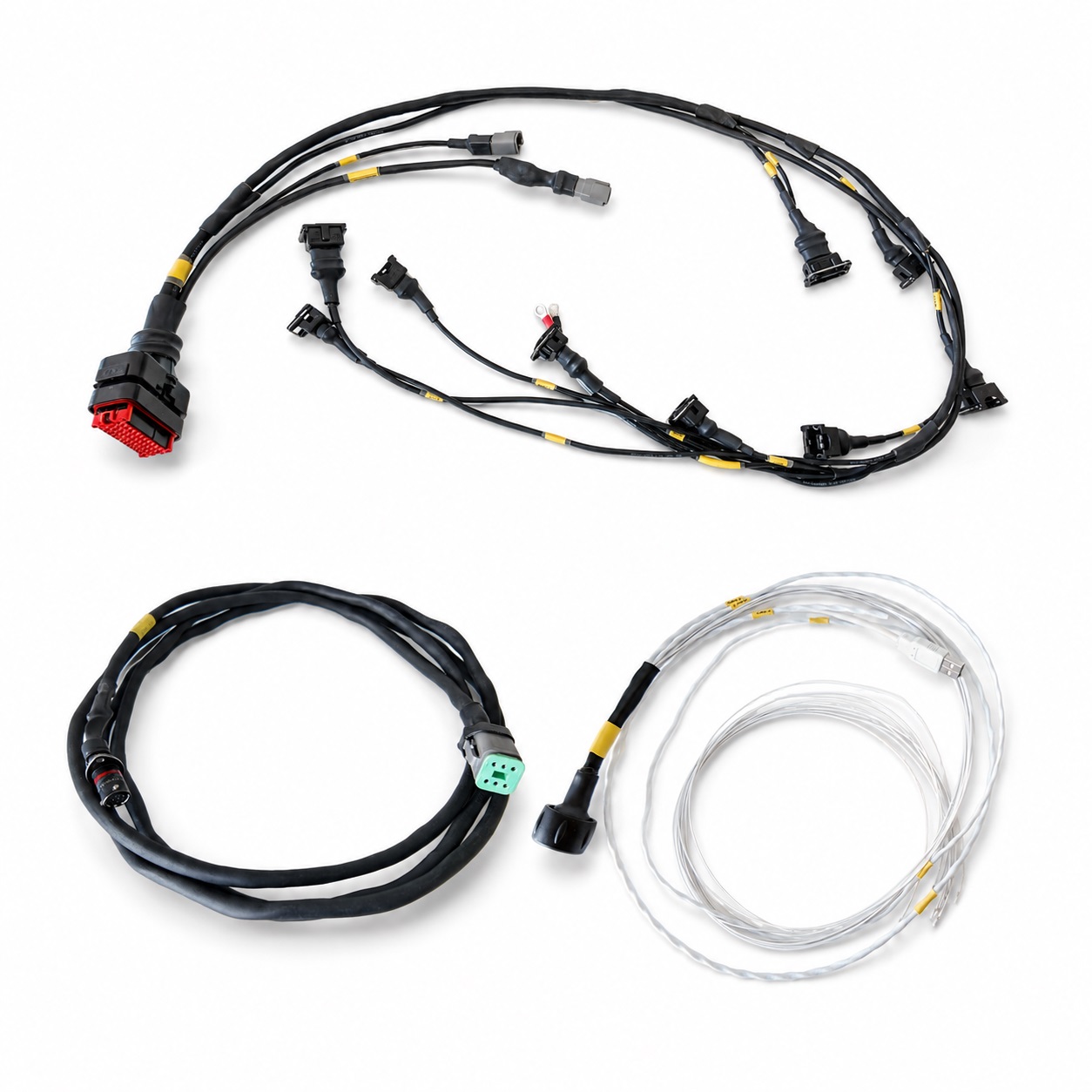
Design, manufacture and control of electrical harnesses adapted to your architecture.
Do you have an electrical architecture project?
Renovation of a vehicle, replacement of a relay box, integration of a Powerbox or development of a multi-voltage architecture: the XAP design office can support you in defining, sizing and integrating your electrical system.