
Data Acquisition Solutions
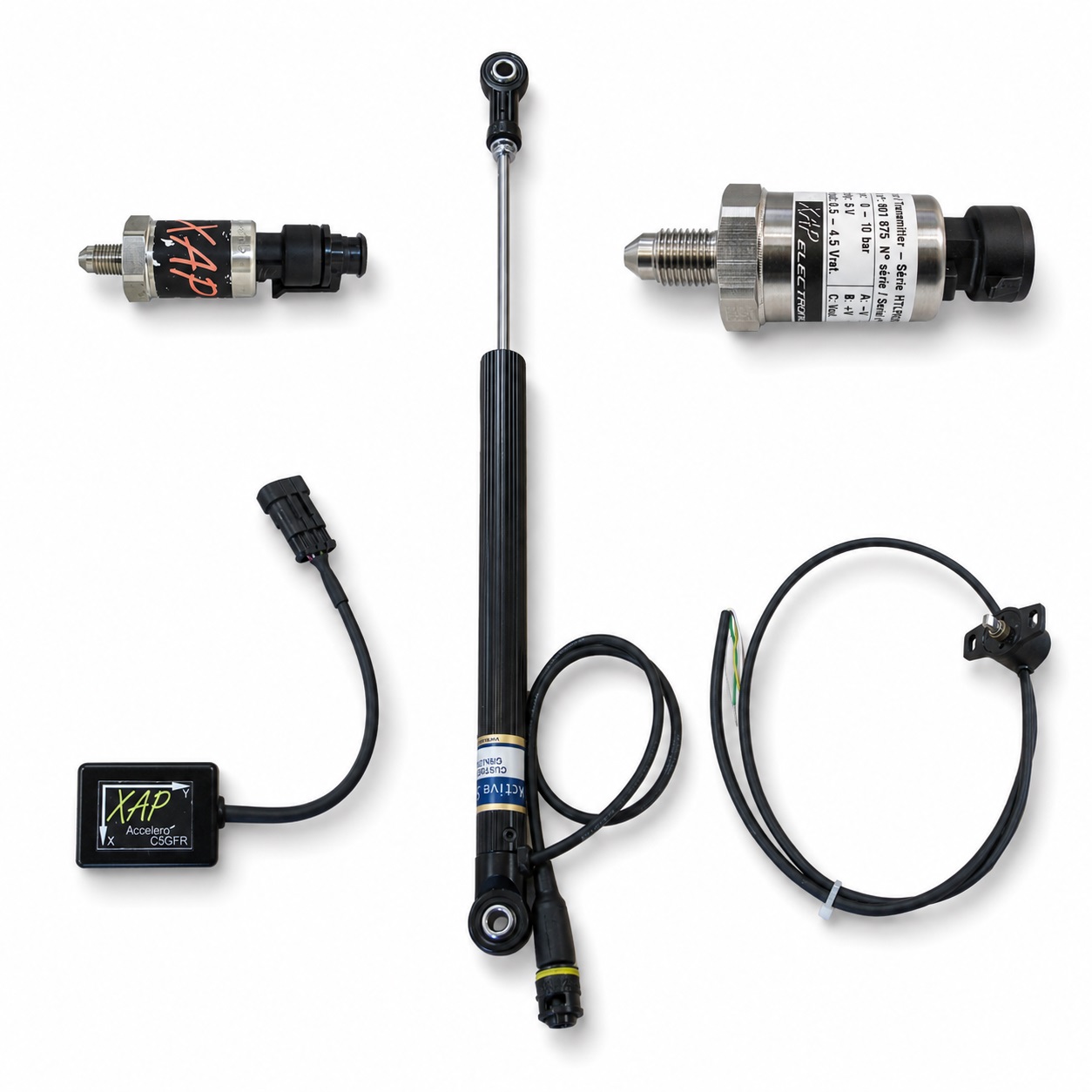
Measure
Sensors: transforming the physical world into actionable data
XAP makes vehicle data immediately actionable for the pilot, engineer and test bench.
Any control, management or optimization begins with a reliable measurement. The quality of a data acquisition system depends above all on the relevance of the information provided to it. This is why XAP has been developing architectures capable of integrating several hundred heterogeneous sensors within the same electronic system.
Whether it is a racing car, a professional drone, a ship, an industrial machine or an energy system, the physical quantities to be measured are numerous: temperatures, pressures, flow rates, positions, accelerations, rotational speeds, mechanical forces, voltages, currents, powers, fuel levels, logic states, vibrations, GPS parameters, inertial centers or even environmental sensors.
XAP sensor solutions have been designed to accept both analog and digital sensors, frequency signals, stress gauges, thermocouples, PT100/PT1000 probes, Hall effect sensors, incremental encoders or absolute, intelligent CAN sensors as well as new generations of connected sensors using modern industrial protocols.
The goal is not only to measure, but to guarantee a stable, synchronized and reproducible measurement, whatever the conditions of use. Severe environments impose significant constraints of vibrations, temperatures, humidity or electromagnetic disturbances. The architectures developed by XAP ensure signal conditioning, appropriate electrical protection and temporal synchronization to precisely correlate several hundred parameters.
This expertise in instrumentation enables an extremely accurate understanding of a system’s behaviour. It forms the essential foundation for the diagnostic, energy optimisation, predictive maintenance, quality control and performance analysis functions that characterise the smart systems developed by XAP today. The same technologies are today used as well in motorsport, special vehicles, defense, drones, energy storage systems or complex industrial facilities.
Centralize
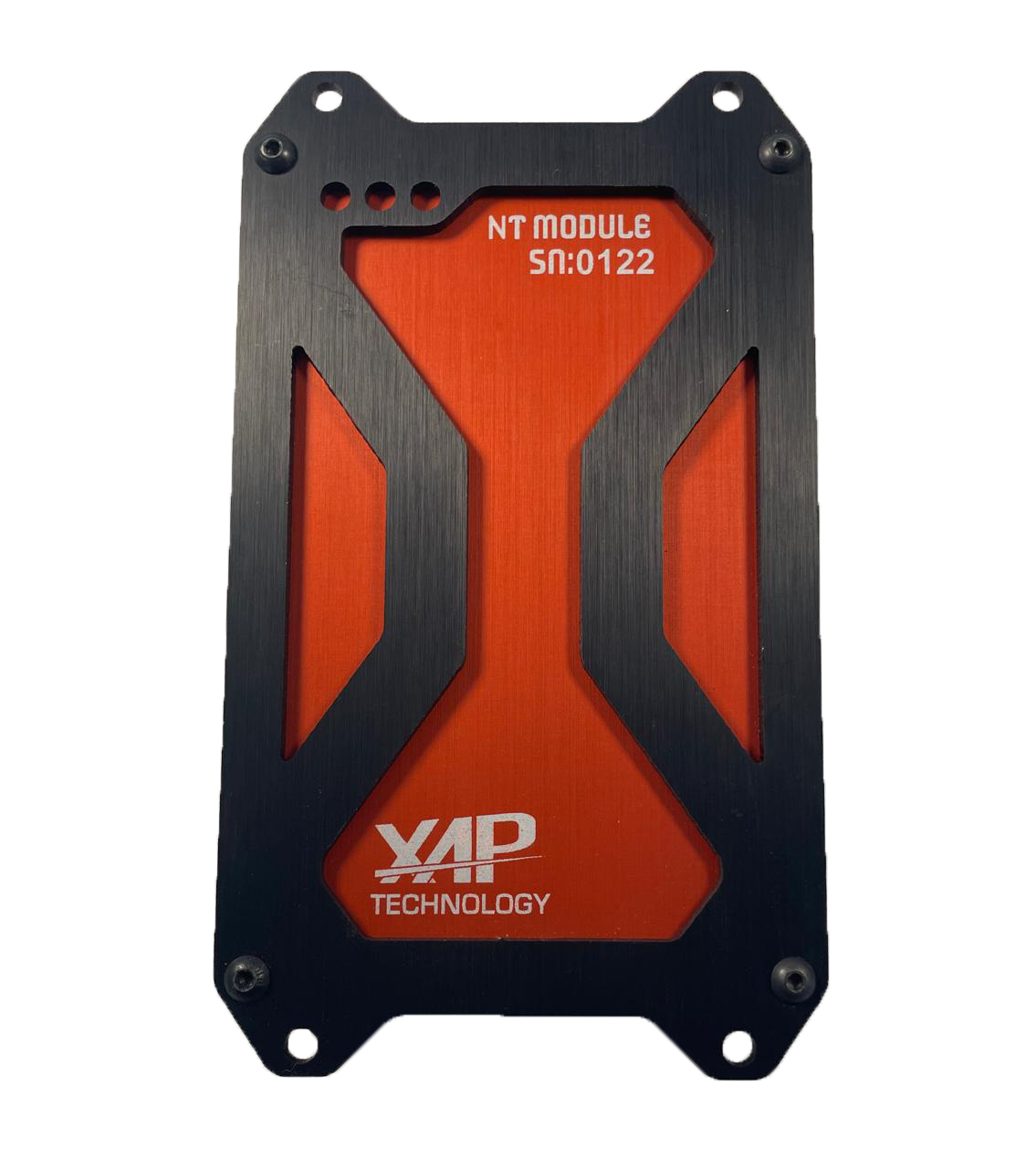
the acquisition modules: Centralize hundreds of analog and digital data to distributed digital architectures
Advances in embedded systems are leading to intelligence being distributed as close as possible to the equipment. Rather than concentrating all inputs in a single central processing unit, XAP is developing a distributed architecture for analogue and digital signals, based on intelligent acquisition modules that can be installed directly alongside the instrumented components.
Each module performs signal conditioning, digital conversion and time synchronisation locally, before transmitting the signals to the main controllers via CAN, CAN FD, Ethernet or other industrial bus networks. This architecture significantly reduces cable lengths, improves electromagnetic immunity, simplifies mechanical integration and increases the overall reliability of the system.
XAP modules are capable of simultaneously acquiring fast analog signals, logic inputs, frequency measurements, serial communications, intelligent sensors as well as information directly from motor computers, BMS, electric drives or industrial PLCs.
This modular approach makes it possible to progressively evolve an electronic architecture without calling into question the equipment already installed. Anywhere from a few dozen to several thousand variables can thus be monitored in a consistent manner within a single system.
The modules thus become the real nodes of a distributed network where each equipment participates in the production of a complete picture of the machine’s operation. This philosophy, stemming from automotive racing environments where reliability is an absolute requirement, is now applied to the industrial, energy and defense sectors.
Register
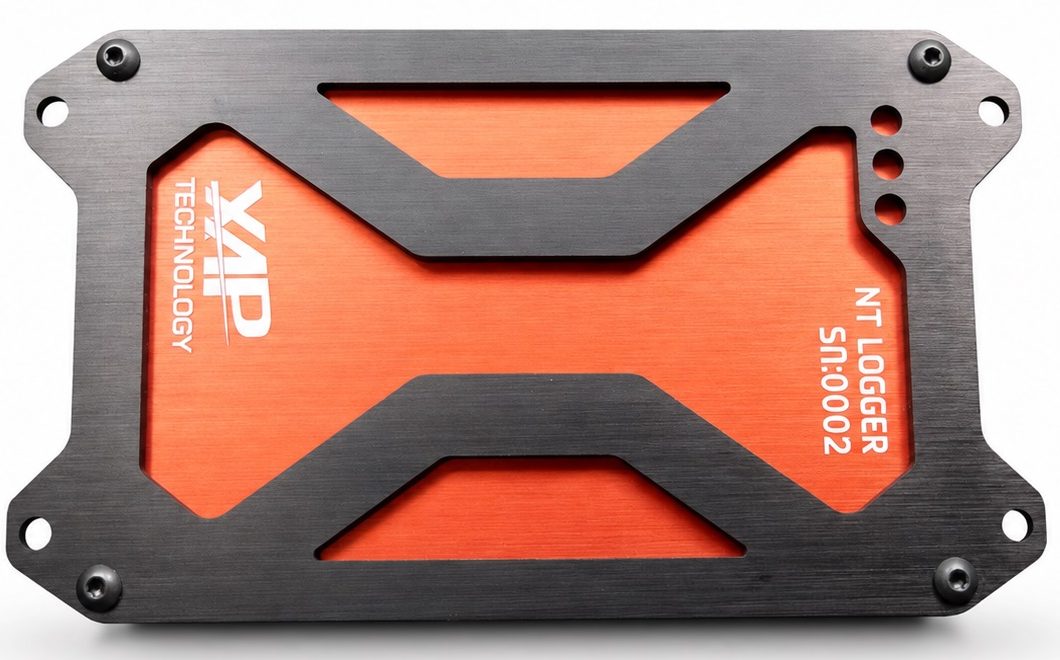
Dataloggers: Save each event to understand, optimize and prove
Data is of value only if it can be found, analyzed and compared. The dataloggers developed by XAP ensure a high speed recording of the set of parameters from the different embedded networks.
Able to memorize several hundred channels simultaneously, they record data from engine computers, electrical systems, batteries, sensors, CAN, CAN FD or Ethernet networks with precise synchronization allowing faithful replay of each event.
XAP recorders are not limited to storing measurements. They also make it possible to log critical events, changes in status, alarms, faults, startup sequences, security procedures as well as actions performed by the operators. This “black box” function is today an essential tool for validation, maintenance and incident analysis.
Thanks to large storage capacities and optimized architecture for quick acquisitions, XAP systems meet both bench test requirements and automotive competitions, special vehicles, energy systems or autonomous platforms.
The recorded data then becomes the raw material of the tools danalysis, making it possible to compare several trials, identify operating excesses and continuously improve system performance.
Supervise
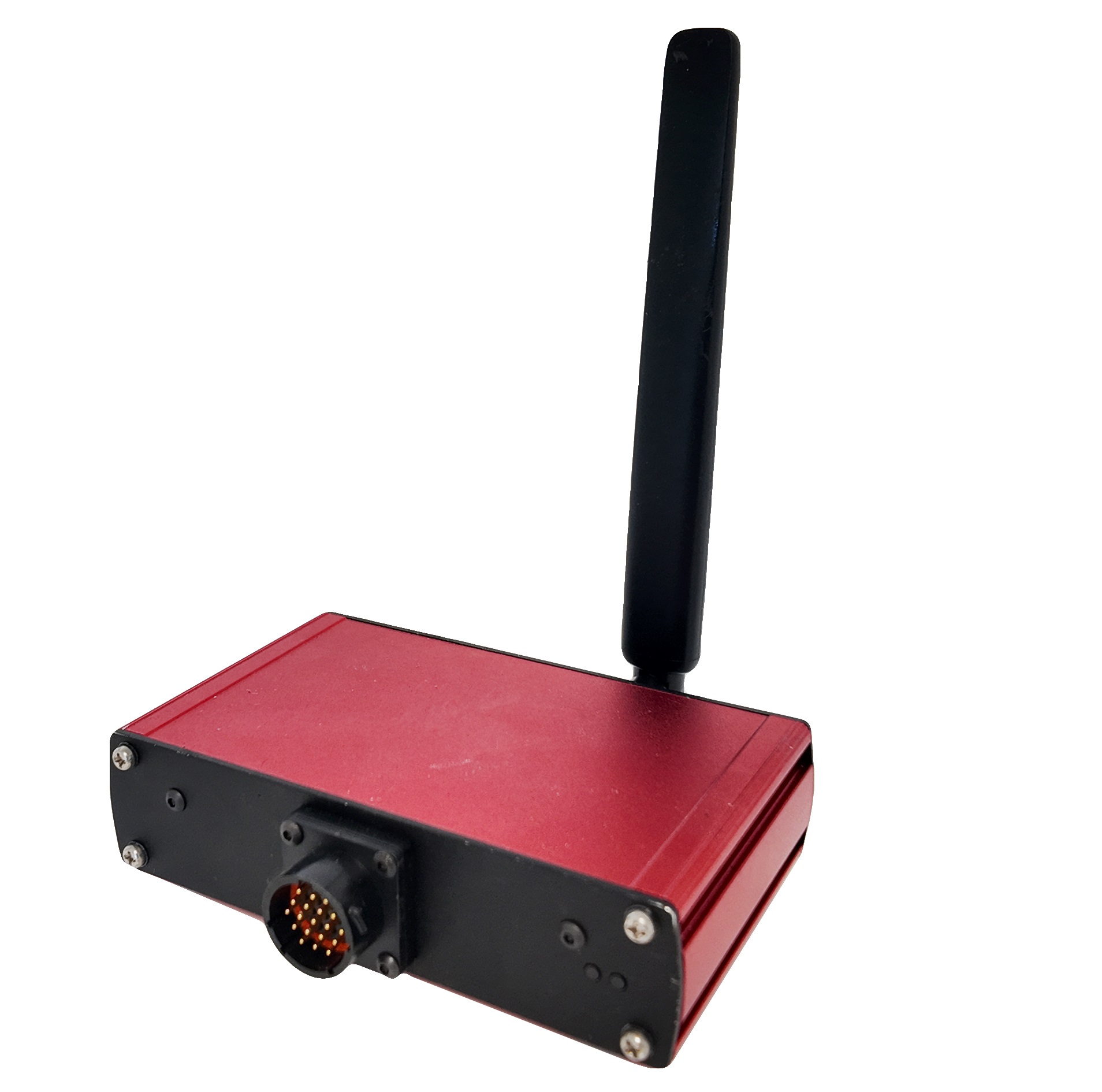
Telemetry: Supervising your equipment all over the world
Local data collection is no longer an end in itself. Modern systems must transmit their data in real time to enable continuous monitoring of equipment, wherever it may be.
The telemetry platform developed by XAP establishes a continuous link between embedded systems and a secure supervision infrastructure. the data collected by the computers, the modules. Acquisition and sensors are transmitted via 4G, 5G, Wi-Fi, Ethernet or IP networks to a platform capable of storing, processing and returning them immediately to users.
This architecture allows real-time tracking of competition vehicles, drones, industrial fleets, energy systems, fixed installations or special machines. Users can instantly view critical settings, receive alerts, compare multiple devices, accessEvent history or remote intervention on certain authorized settings.
Beyond simple data transmission, the XAP platform is a real cyber-physical system integrating two-way communication, remote supervision, predictive maintenance, fleet management, digital twin and decision support. Its distributed architecture allows it to be deployed both on XAP’s cloud infrastructure and on the client’s own servers where security or privacy requirements so dictate.
Analyze
software dAnalysis: turning data into decisions
The true value of a data acquisition system lies not in the volume of data collected, but in its ability to transform that data into useful information.
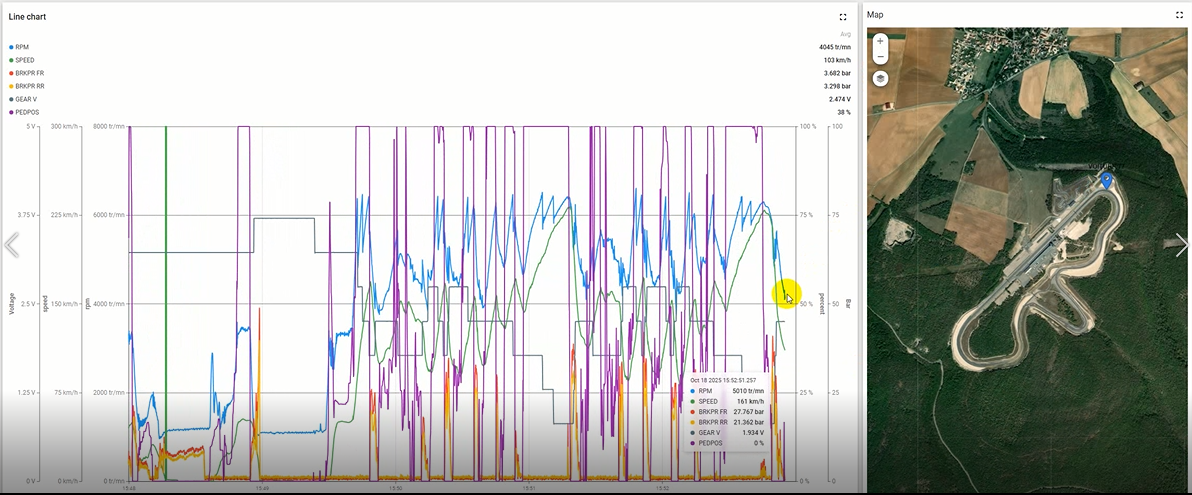
The software developed by XAP allows you to configure the equipment, view real-time acquisitions, replay tests, compare several sessions, automatically generate reports and build dashboards adapted to the needs of each user. Software environment covers data life cycle: System configuration, sensor calibration, measurement processing, statistical analysis, advanced mathematical calculations, variable correlation, alarm generation, real-time supervision and predictive maintenance.
Thanks to an open architecture, XAP software interfaces with all the equipment in the ecosystem: smart dashboards, data acquisition modules, data loggers, telemetry systems, BMS, control units, and CAN and CAN FD networks. It also enables the integration of data from third-party equipment to provide a unified view of the entire system.
This digital continuity is one of XAP’s key strengths. From the sensor to the engineering workstation, every piece of information follows a coherent, secure and fully controlled data flow. The data thus becomes a genuine management tool, enabling improved performance, reduced operating costs, the anticipation of faults and the acceleration of development for even the most complex systems.
Design an actionable data chain
Data acquisition and analysis takes on its value when it remains coherent with the Vehicle system set: Pilot interface, controls and electrical integration. Also consult our Motorsport Loom Solutions and our Gearbox Actuators Solutions.
A project? a specific request?
Discuss with our R&D Office to define your system together and draw personalized solutions to better manage your data during and after the race.